
The email announcing this quarter's strategy update has a 40% open rate if you are lucky. The all-hands meeting gets attended, but half the audience joins late from their phones and the recording sits unwatched in a shared drive. The internal newsletter has not changed format in three years.
None of these are failures of intent. They are symptoms of a communication infrastructure built for a different era of work.
A growing number of mid-to-large organisations are turning to internal podcasts to reach employees in a format they actually engage with, on their own schedule, without requiring attendance at a fixed time.
Why internal podcasting is gaining traction now
The drivers are practical, not fashionable.
The first is distribution. Employees increasingly work across hybrid arrangements, time zones, and shifts. A message delivered at 10am on a Tuesday reaches the people who were available at 10am on a Tuesday. A podcast episode can be consumed while commuting, walking, or between calls, reaching the whole workforce, not just those who were in the room.
The second is tone. Research by Workplace by Facebook found that in the UK, 32% of employees said communications from their leadership team during the pandemic felt cold and impersonal, and 31% felt leadership showed a lack of empathy for people's personal lives. Email inherently lacks warmth. Audio does not. When a CEO speaks directly into a microphone and explains a difficult decision, employees hear the tone of the voice. That is qualitatively different from reading the same message formatted as a newsletter.
As Nazir Ul-Ghani, then head of Workplace from Facebook for EMEA, put it in Digiday's reporting on internal podcasting: "You can't show empathy over email, it just doesn't work."
The third driver is scale. A podcast does not require scheduling coordination across hundreds of employees. It publishes once and is accessible to everyone.
The communication problem it is actually solving
Internal podcasts work best when they are solving a specific communication problem, not when they are launched as a general initiative.
The most common use cases where the format genuinely adds value:
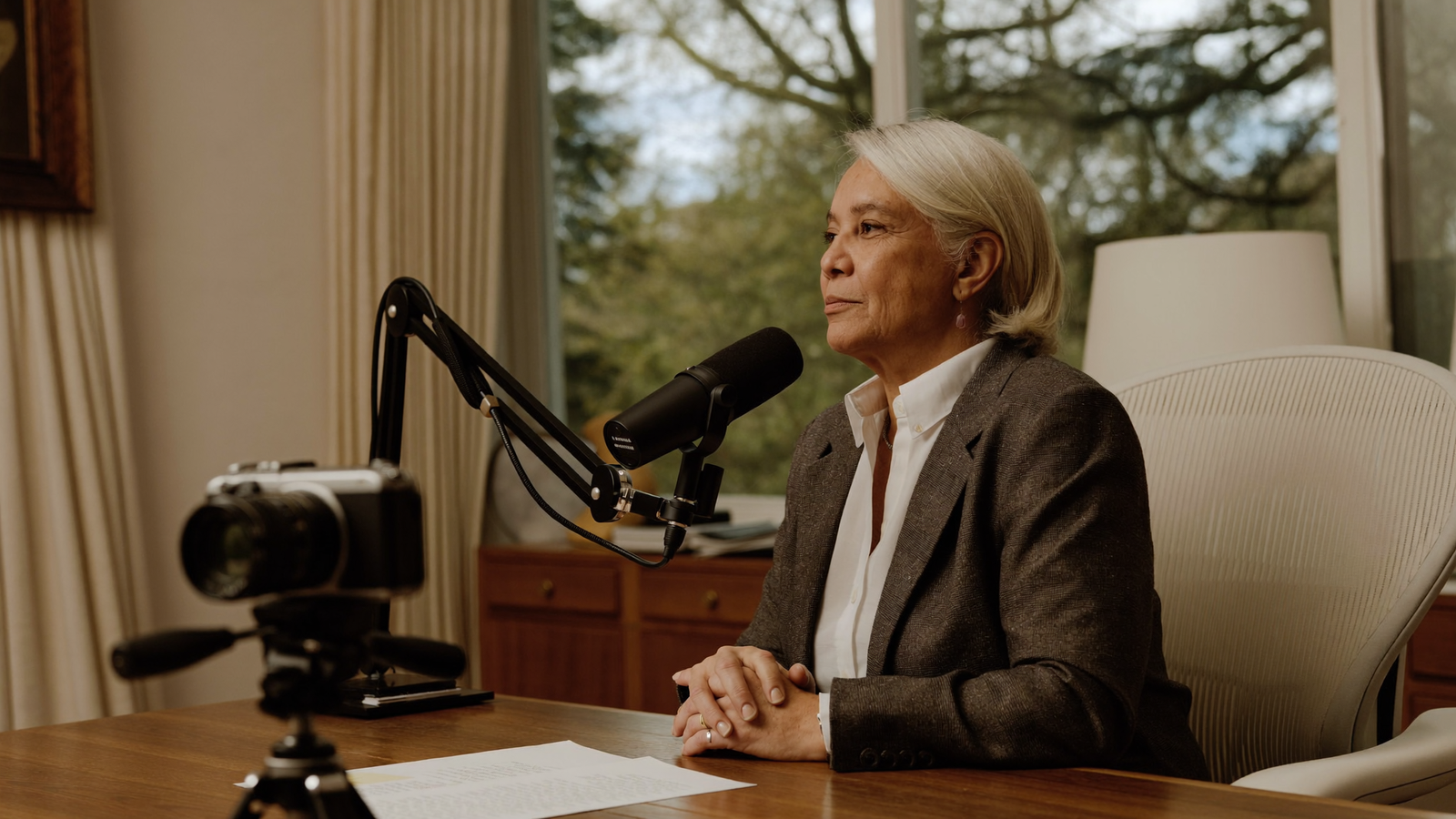
Leadership visibility. Senior leaders have important things to say, but writing takes time and polish and tends to produce something more formal than intended. Speaking directly to employees in a regular podcast, even ten minutes per month, conveys character, conviction, and humanity in a way that written communications rarely do. The format suits CEOs, managing partners, and department heads who want employees to feel connected to leadership thinking.
Strategic context. When the organisation is going through change (a restructure, a strategic pivot, an acquisition), employees want explanation, not just announcement. A podcast episode allows a leader to walk through the reasoning, field common questions, and acknowledge uncertainty in a natural way.
Cross-team knowledge sharing. Organisations with teams across offices or disciplines often lack informal knowledge exchange. A podcast format, say "five minutes with the team behind the new client platform", creates that connection without requiring anyone to attend a meeting.
Onboarding. New employees often receive documents, intranet pages, and policy handbooks. A short podcast series explaining the culture, the organisation's history, and the perspectives of senior leaders creates a warmer introduction that written materials cannot replicate.
What effective internal podcasts look like
The format varies considerably depending on the communication goal, but some structural principles hold across most successful examples.
Short is almost always better. An internal podcast does not need to be 45 minutes. A ten to fifteen minute update, published consistently, will be listened to more reliably than an hour-long production published quarterly. The team at A+E Networks, cited by employee engagement platform Workvivo, runs short internal episodes called BASEcast, in an informal interview style covering company news and culture. Consistency and length suit a regular listening habit.
Quality matters more than it might seem. Audio that is hard to listen to (background noise, echo, inconsistent levels) signals that the communication is low priority. Even for an internal podcast without a public audience, basic audio quality (a single dedicated microphone per speaker, a treated room, consistent levels) makes the difference between something people listen to and something they abandon thirty seconds in.
Video is worth considering. An internal leadership video podcast, recorded simply with one or two cameras, allows employees to see as well as hear the speaker. This is particularly valuable for new employees who have not met senior leaders in person, and for organisations with visual cultures. The same equipment and process used for external video podcasting applies internally: the difference is distribution channel, not production approach.
A regular cadence builds the habit. The organisations that see the most impact from internal podcasts publish on a reliable schedule. Monthly is a common and sustainable frequency. Weekly is achievable with the right production support but requires a clear workflow to sustain.
What you need to get started
The barrier to starting an internal podcast is lower than most internal comms teams assume.
At the simplest level: a decent USB microphone (Shure MV7, Rode NT-USB), a quiet room with reasonable acoustics, and a private hosting platform where employees can access episodes. Platforms like Spotify for Podcasters allow private RSS feeds, and tools like Workvivo and Oak Engage (widely used for UK intranets) offer native internal podcast features.
The key consideration is production quality. An internal podcast produced to the same standard as an external one (consistent audio, a clear intro, clean editing) conveys professionalism and respect for the audience. An internal podcast recorded on a laptop microphone in an echoey conference room conveys the opposite.
Many organisations start by handling production in-house, discover the editing overhead compounds quickly, and choose to outsource production. The same post-production process that applies to an external video podcast applies to internal ones: recording, editing, audio mixing, exporting, and for video episodes, multicam editing and clipping.
The measurement question
Internal comms teams sometimes ask how to measure whether an internal podcast is working. The honest answer is that standard podcast metrics (downloads, completion rates) are more limited in an internal context, where the audience is fixed and distribution is controlled.
More useful measures are qualitative: Are employees referencing podcast episodes in conversation? Are questions in town halls reflecting things the leadership podcast covered? Is the show creating topics of discussion that previously would not have existed?
According to the Axios HQ State of Internal Communications 2025 report, only 9% of employees agree that they are fully aligned with their organisation's business goals, even though 27% of leaders believe they are. An internal podcast that genuinely improves that alignment, giving employees a clear picture of where the organisation is going and why, is producing real value, whether or not it shows up in a download chart.
The bottom line
Internal podcasting is not a trend. It is a format that solves a communication problem organisations have always had: how to reach a dispersed, busy workforce with messages that feel personal rather than institutional.
The organisations doing it well treat it like any other production: with a clear brief, consistent quality, and a publishing schedule that gives employees a reason to form a listening habit.
If you are thinking about what a well-produced internal podcast could look like for your organisation, get in touch.